

Eixample Left vs. Eixample Right: Two Sides of Barcelona's Most Iconic District
Discover the differences between Eixample Left and Eixample Right, from architecture and lifestyle to property prices, neighbourhood atmosphere and the best places to buy a home in Barcelona.
Barcelona's Eixample is one of the city's most recognisable districts, celebrated for its elegant architecture, wide avenues and distinctive grid layout. Designed in the 19th century by urban planner Ildefons Cerdà, it has become one of Barcelona's most sought-after residential areas, combining historic charm with the convenience of modern city living.
Yet Eixample is far from uniform. Two of its best-known neighbourhoods, Eixample Esquerra (Left Eixample) and Eixample Dreta (Right Eixample), offer slightly different experiences of Barcelona life.
Both share the architectural character, central location and excellent amenities that make Eixample so appealing. The biggest difference is in the day-to-day feel: away from its main avenues, Eixample Dreta is predominantly residential and calm, while Eixample Esquerra has a far greater concentration of restaurants, bars and nightlife.
Eixample Dreta: Modernist Heritage and Elegant Boulevards
Located to the east of Carrer de Balmes, Eixample Dreta is closely associated with Barcelona's celebrated Modernist architecture.
This is where some of the city's most famous buildings can be found, including Gaudí's Casa Batlló and Casa Milà, alongside numerous lesser-known architectural treasures. Passeig de Gràcia, one of Barcelona's most prestigious avenues, runs through the neighbourhood, bringing together luxury boutiques, historic buildings, hotels and restaurants.
Away from Passeig de Gràcia and Rambla de Catalunya, Eixample Dreta is predominantly residential. Streets such as Girona, Bruc and Roger de Llúria are noticeably calmer, lined with traditional apartment buildings, neighbourhood cafés and local businesses rather than clusters of bars. For many buyers, particularly those who value quiet evenings, this residential character is one of the area's main attractions.
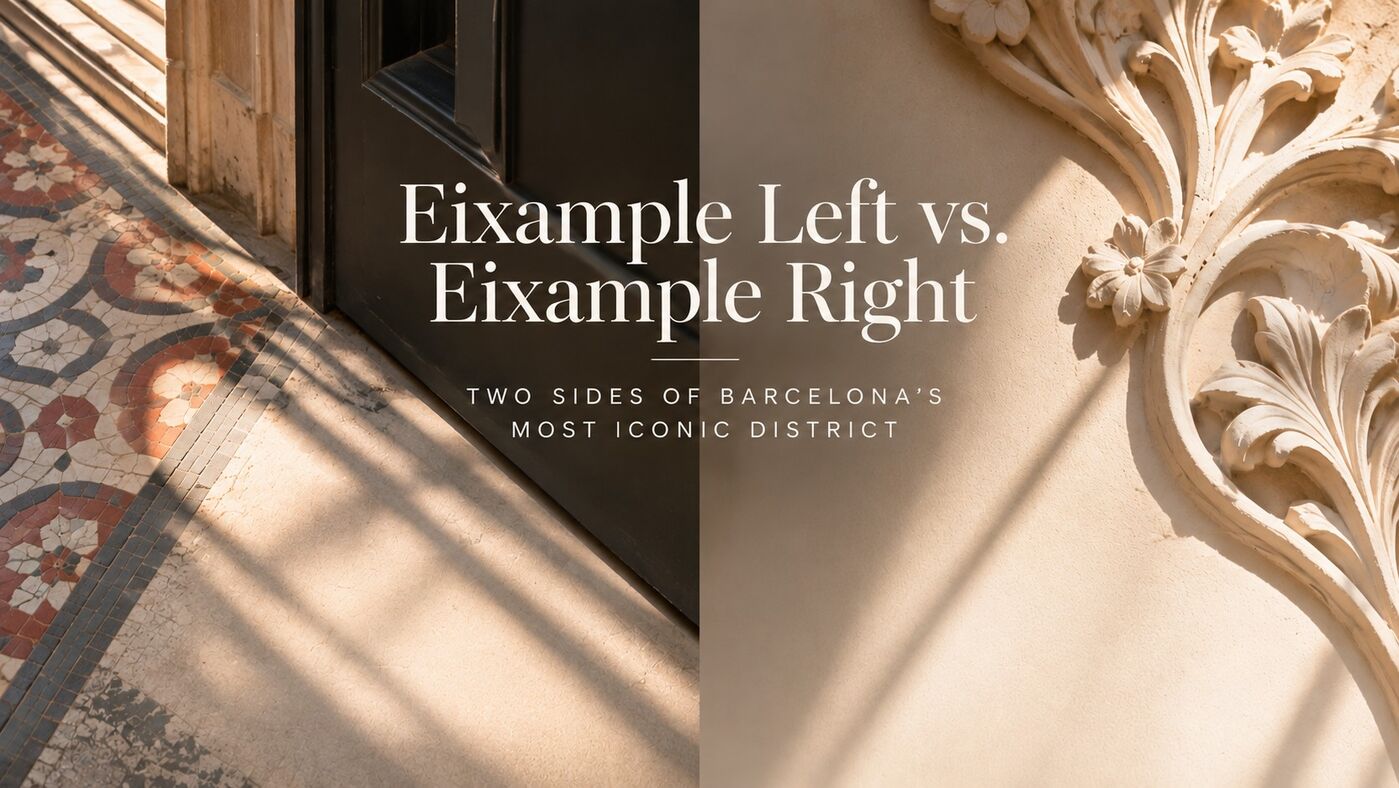
The area's architecture is one of its defining features. Many residential buildings retain original details such as high ceilings, decorative mouldings, hydraulic floor tiles and traditional balconies. Renovated apartments often combine these historic elements with contemporary interiors.
For property buyers, Eixample Dreta offers a wide range of possibilities, from classic apartments in century-old buildings to carefully restored homes and contemporary residences.
Eixample Esquerra: Local Character and Contemporary City Living
On the other side of Carrer de Balmes, Eixample Esquerra offers a similarly central location and architectural setting, but with its own distinct atmosphere.
The neighbourhood has a much higher concentration of restaurants, bars and terraces than Eixample Dreta. Carrer d'Enric Granados is known for its terraces and cafés, while streets such as Aribau, Muntaner, Casanova and Consell de Cent have a busy evening and late-night scene.
This vibrancy is a big part of Eixample Esquerra's appeal, but it is also something to weigh up carefully when choosing a home. An apartment on or near a busy bar street can be noisy late into the evening and at weekends, so the specific street, the floor level and whether the bedrooms face the street or the interior courtyard matter a great deal.
Eixample Esquerra is also home to Mercat del Ninot, a traditional market that remains an important part of neighbourhood life, and the historic University of Barcelona building near Plaça Universitat.
Its streets reflect a combination of traditional Barcelona living and a contemporary urban lifestyle. Independent shops, cultural spaces, restaurants and everyday services sit alongside residential buildings, creating an environment where much of daily life takes place within walking distance.
Architecturally, Eixample Esquerra shares many characteristics with its eastern counterpart. Period apartments with balconies, high ceilings, and original details are common, as are renovated properties adapted to modern living.
The neighbourhood includes both the Antiga Esquerra de l'Eixample and the Nova Esquerra de l'Eixample, which have their own subtle differences in building styles, street layouts and residential atmosphere.
Architecture: A Shared Identity with Different Landmarks
One of the most interesting aspects of comparing the two neighbourhoods is how much they have in common architecturally.
Both were shaped by Cerdà's urban planning vision, with broad streets, chamfered corners and interior courtyards designed to improve light, ventilation and movement throughout the city.
In Eixample Dreta, the architectural landscape is particularly associated with landmark Modernist buildings and the grand façades of Passeig de Gràcia.
Eixample Esquerra also features beautiful historic buildings, although its architectural identity is often experienced through residential streets rather than internationally recognised monuments.
In both areas, apartment characteristics can vary significantly from one building to another. The floor level, orientation, natural light, presence of a lift and condition of the building are often more important than which side of Eixample a property is located on.
Lifestyle: Two Ways to Experience Central Barcelona
Both neighbourhoods offer an exceptionally convenient urban lifestyle, with excellent public transport connections, shops, restaurants, cultural attractions and essential services within easy reach.
Eixample Dreta has a strong connection to Barcelona's architectural and commercial identity. Its proximity to Passeig de Gràcia, Plaça Catalunya and many of the city's major landmarks creates a dynamic atmosphere along its principal avenues. Step a block or two away, however, and the neighbourhood becomes noticeably more residential, with quieter streets and calmer evenings.
Eixample Esquerra is the livelier of the two, particularly after dark. Its social life revolves around restaurants, bars, terraces and markets, and streets such as Enric Granados and Consell de Cent have become destinations in their own right.
Neither neighbourhood has a single, uniform atmosphere. A quiet interior-facing apartment can be found just a short distance from a busy commercial street in either area. Similarly, some residential streets are considerably calmer than others, regardless of their location within Eixample.
For those considering living in either neighbourhood, exploring the streets at different times of day can provide a better understanding of the surroundings than simply looking at a map.
Property in Eixample Esquerra and Eixample Dreta
From a real estate perspective, both areas are well established within Barcelona's residential market and attract local and international buyers.
Eixample Dreta includes some of the city's most prestigious addresses, particularly around Passeig de Gràcia and the streets surrounding its celebrated architectural landmarks. Properties in these locations may command a premium due to their specific address, architectural significance, views, or building characteristics.
Eixample Esquerra offers a broad selection of residential properties, ranging from traditional apartments requiring renovation to fully refurbished homes with modern layouts and finishes.
However, property prices in both neighbourhoods vary considerably. A beautifully renovated, bright apartment with a terrace in Eixample Esquerra may be more expensive than a property requiring substantial work in Eixample Dreta.
Rather than considering one side inherently more valuable than the other, buyers benefit from looking closely at the individual property, its immediate surroundings and the qualities of the building itself.
Limited Supply and Its Effect on Pricing
One of the most important factors in today's Eixample market is the shortage of properties for sale. Both neighbourhoods are almost entirely built up, there is very little new construction, and well-presented apartments in good buildings tend to sell quickly.
This lack of stock has a direct effect on pricing. With few comparable properties on the market at any one time, asking prices can vary widely and do not always make sense when looking at the overall offer. Two similar apartments on the same street may be listed at very different prices, and a single new listing or sale can noticeably shift expectations. Some sellers price ambitiously to test the market, while others price realistically and sell within weeks.
For buyers, this means that asking prices alone are not a reliable guide to value. Understanding recent completed sales, why a particular property is priced as it is, and being ready to act when the right home appears are often more important than waiting for the market to settle. For sellers, accurate pricing from the outset remains essential: even in a market with strong demand, overpriced properties can sit unsold.
Eixample Esquerra vs. Eixample Dreta at a Glance
|
|
Eixample Dreta |
Eixample Esquerra |
|
Architecture |
Prominent Modernist landmarks and historic residential buildings |
Traditional Eixample architecture and varied residential buildings |
|
Atmosphere |
Mainly residential and calm away from the main avenues |
Lively, with a high concentration of restaurants, bars and nightlife |
|
Shopping |
Luxury boutiques, international brands and independent shops |
Independent retailers, everyday shops and commercial streets |
|
Dining |
Fine dining, international restaurants and neighbourhood cafés |
Busy restaurant, bar and terrace scene, especially in the evenings |
|
Evenings |
Generally quieter, especially on side streets |
Busy on popular bar and restaurant streets; noise varies by street |
|
Notable locations |
Passeig de Gràcia, Casa Batlló, Casa Milà |
Enric Granados, Mercat del Ninot, University of Barcelona |
|
Property types |
Historic apartments, Modernist residences and renovated homes |
Period apartments, refurbished residences and contemporary interiors |
|
Transport |
Excellent metro, bus and rail connections |
Excellent metro and bus connections |
Choosing a Home in Eixample
When searching for a property in Barcelona, the distinction between Eixample Esquerra and Eixample Dreta is a useful starting point, but it should not be the only consideration.
Both neighbourhoods offer the advantages that have made Eixample one of Barcelona's most desirable residential districts: beautiful architecture, central locations, walkable streets and a wide variety of amenities.
The choice often comes down to personal preferences and the characteristics of individual streets and buildings. Buyers who value calm, residential streets and proximity to landmark architecture often lean towards Eixample Dreta, while those who want restaurants, bars and an active social life on their doorstep tend to favour Eixample Esquerra.
Ultimately, the most important factors are finding a property that suits your lifestyle, offers the right layout and features, and is located in a part of the neighbourhood where you feel at home.
With limited stock in both neighbourhoods, it also pays to be well prepared: know your priorities, have your finances in order and work with an agent who understands how individual streets and buildings are really valued.
Discover Properties in Barcelona's Eixample with Urbane
At Urbane International Real Estate, we help international and local buyers discover properties throughout Barcelona, including both Eixample Esquerra and Eixample Dreta.
Whether you're interested in a classic Barcelona apartment with original architectural features, a fully renovated home, or a contemporary residence, our team can guide you through the different streets, buildings and property options available. With so little stock on the market, we can also help you assess whether an asking price is realistic and alert you to suitable properties as soon as they become available.
Contact Urbane International Real Estate to explore properties in Eixample and find the Barcelona home that best suits your needs.